
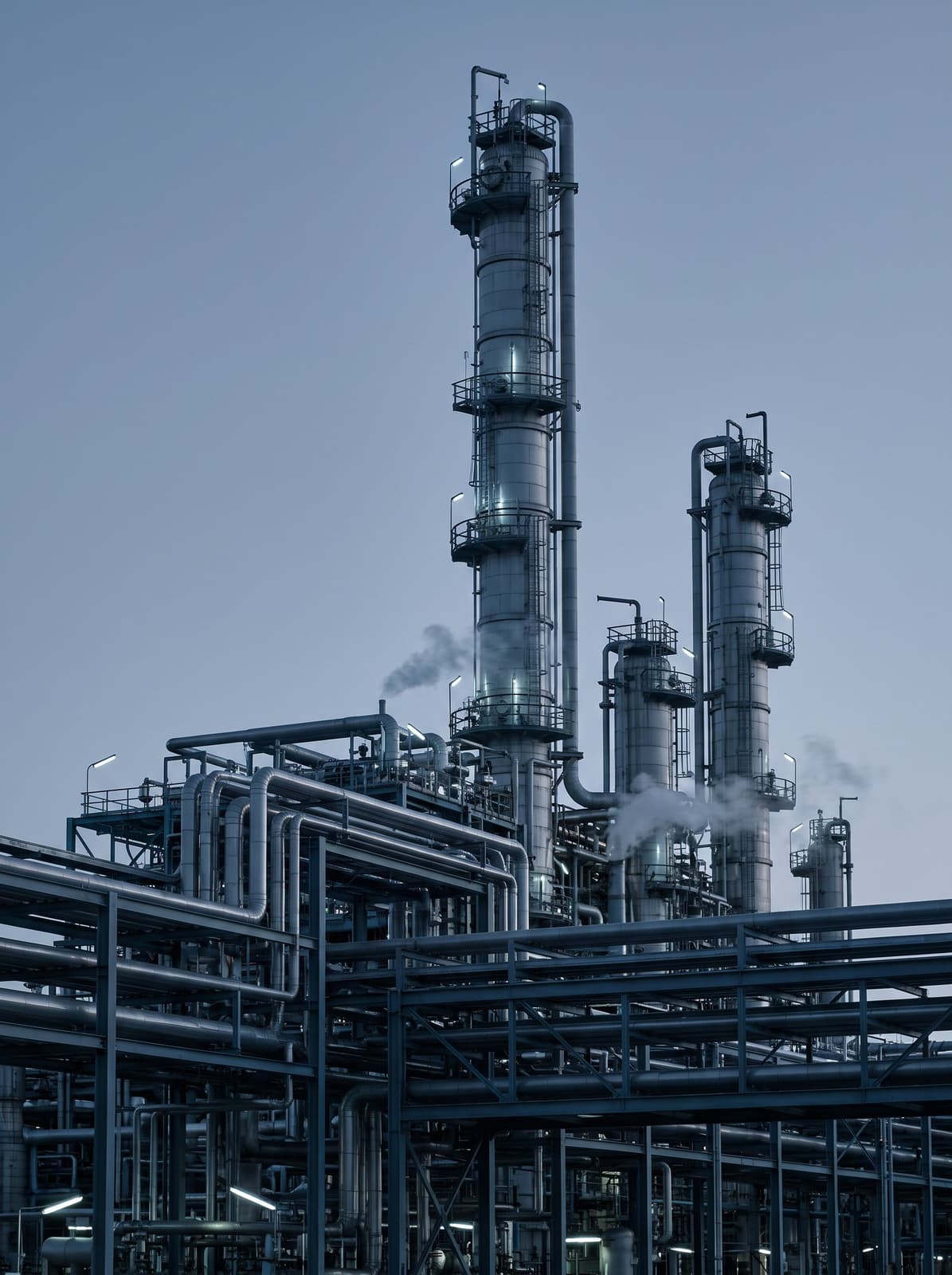
Oil & Gas
Technology integration for oil and gas environments.
Oil and gas operators need process, safety and security systems to remain available and segregated across hazardous and remote environments.
What makes it hard
The challenges we are asked to remove.
- Hazardous-area classifications that constrain equipment selection, cabling routes and installation methods
- Process control networks that must remain segregated from corporate IT without losing operational visibility
- Remote terminals and unmanned assets with limited bandwidth and no resident technical staff
- Legacy SCADA and telemetry estates operating alongside modern IP-based systems
- Commissioning windows constrained by shutdowns, turnarounds and permit-to-work regimes
Diagram showing oil and gas technology as connected layers: hazardous-area field devices and instrumentation, process control and telemetry networks, IT and OT segmentation with cybersecurity, resilient site and remote communications, site security systems, all supported by managed operations.
Sector context
What makes oil and gas technology different
Area classification governs everything that follows. The Dangerous Substances and Explosive Atmospheres Regulations 2002 require an employer to assess where an explosive atmosphere may occur and to classify those places into zones. BS EN IEC 60079-10-1 sets out how areas in which an explosive gas atmosphere may be present are classified. That classification then governs equipment: BS EN 60079-14 covers the design, selection and erection of electrical installations in explosive atmospheres, so an enclosure or a cable gland is selected by protection concept and zone before it is selected by function. A buyer should expect documented evidence of competence before any work inside a classified area is priced.
Protection is layered separately from control. BS EN 61511-1 sets requirements for safety instrumented systems in the process sector, including the integrity level a protective function has to achieve and the review and approval required before a change that affects it. That separation between control and protection is a constraint the network design has to respect, not one it can remove. Offshore, the duty holder operates under a safety case accepted by the regulator, and changes that could affect major accident risk are assessed and recorded before work starts.
Relevant capabilities
How we respond.
Segmented OT and IT network architecture with controlled crossing points
Hazardous-area-compliant CCTV, access control and perimeter detection design
Resilient wide-area and wireless connectivity for remote and terminal assets
Structured cabling and containment engineered for classified and harsh environments
Radio, PA/GA and operational communications integration
Certifications, framework positions and sector references are stated only once verified. Relevant evidence is shared during qualification, subject to confidentiality.
Next step
Bring the complete environment into one conversation.
Tell us what you are planning, replacing, integrating or trying to stabilise. We will help define the right next step.