
Connected operations
Measure conditions before they become faults.
We connect sensors, gateways and edge devices to the platforms already in use, so equipment, facilities and stock report their own condition.
- Define what to measure
- Survey and specify
- Deploy and connect
- Integrate and test
- Monitor and maintain
20 capabilities in scope · outcomes below
The problem we remove
Sites already produce operational data, but much of it stays inside separate controllers, meters and building systems where nobody reads it. Connected operations work only when the sensing, the network path, the platform and the alert route are designed as one chain.
What you get
- 01Continuous condition data from equipment, plant and facilities
- 02Alerts routed to the people who can act on them
- 03Maintenance scheduled on measured condition rather than the calendar
- 04One view of assets, locations and environmental readings
- 05Device security and ownership defined before deployment
- 06Telemetry feeding the dashboards and systems already in use
Capabilities
What this service covers.
Scope register · 20 entries
- IoT consultancy and solution design
- Sensor selection and sensor network design
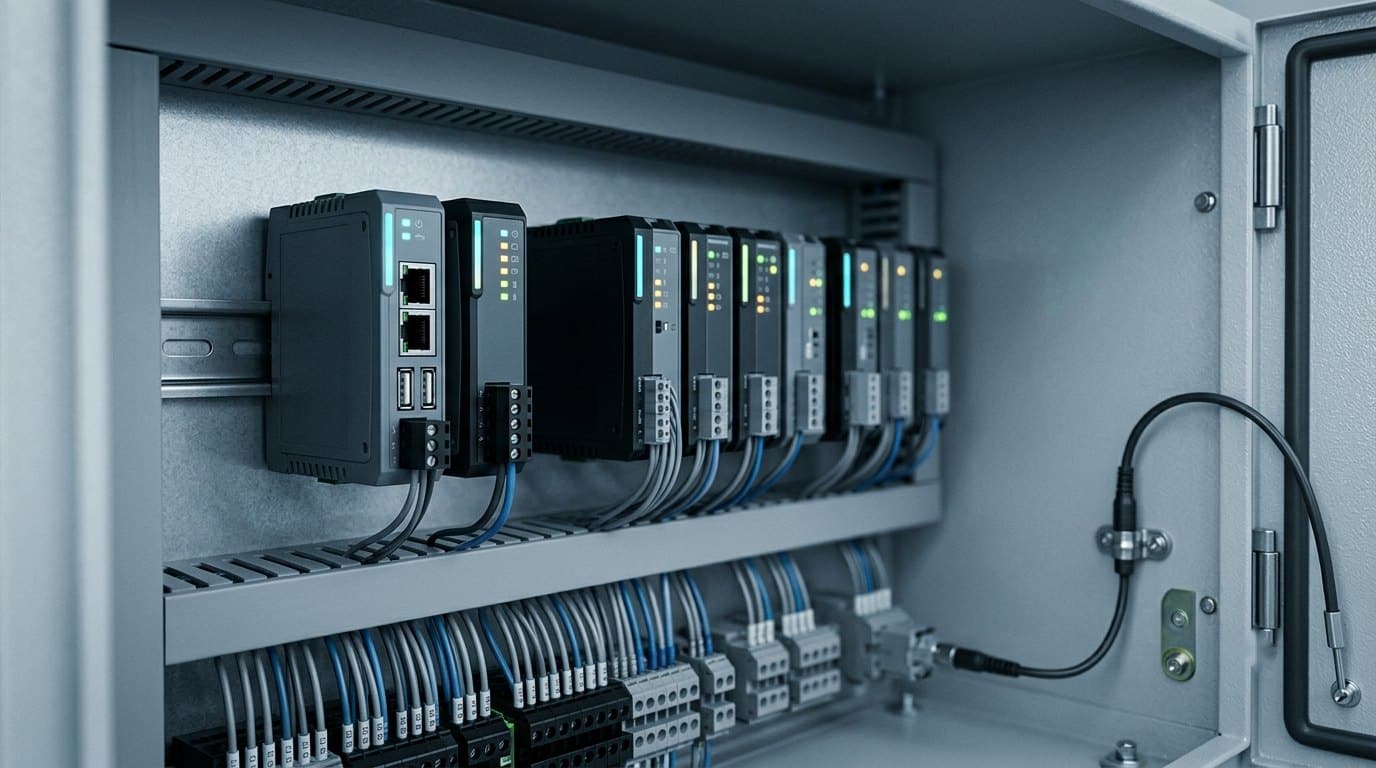
- IoT gateway deployment and edge computing
- Telemetry and IoT cloud platform integration
- Industrial IoT monitoring for plant and production equipment
- Smart building and smart facility monitoring
- Connected medical device telemetry and monitoring
- Environmental monitoring for temperature, humidity and air quality
- Water leak detection and cold-chain monitoring
- Energy monitoring and smart metering
- Equipment and condition monitoring
- Predictive and preventive maintenance triggered by measured condition
- Asset tracking, people tracking and indoor positioning
- Occupancy and space utilisation monitoring
- Remote monitoring of distributed sites and unstaffed locations
- Real-time alerting and automation triggers
- IoT dashboards and operational analytics
- Device identity, hardening and network segmentation for connected estates
- Device lifecycle management from commissioning to replacement
- Telemetry integration with enterprise systems and reporting platforms
What to know
What to settle before the first sensor is fitted
Radio choice sets the boundaries and is hard to reverse once devices are fitted. LoRaWAN reaches across a large site on very little power but carries small payloads at long intervals. NB-IoT uses licensed cellular spectrum and an operator subscription. Zigbee forms short-range mesh links between nearby devices. Wi-Fi offers bandwidth in exchange for a power draw that usually means a mains supply. Reporting interval largely determines battery life, and battery replacement across a distributed estate is a recurring labour cost rather than a one-off event.
MQTT is a lightweight publish and subscribe protocol. OPC UA carries a structured description of the equipment, so a receiving system can interpret a reading rather than only store it. Processing at the gateway rather than in the cloud cuts bandwidth and keeps alerting working when a link drops. The regime under the Product Security and Telecommunications Infrastructure Act 2022 applies to connectable products supplied to consumers in the UK: universal default passwords are prohibited, and the manufacturer must publish how to report security issues and how long security updates will be provided. Industrial equipment may fall outside that scope, so ask each supplier for the same information in writing.
Common questions about iot and connected operations
Do we need to replace our existing building or plant systems?
Usually not. Where a system already exposes its data, the work is to read it and route it somewhere useful. Sensors are added only where a measurement does not exist today, and both sources are brought into one telemetry platform.
How are connected devices kept secure?
Device security is part of the design rather than an addition afterwards: device identity and credentials, segmentation away from corporate and clinical networks, controlled gateway access, a named owner for firmware and patching, and a defined route to decommissioning.
Next step
Bring the complete environment into one conversation.
Tell us what you are planning, replacing, integrating or trying to stabilise. We will help define the right next step.