
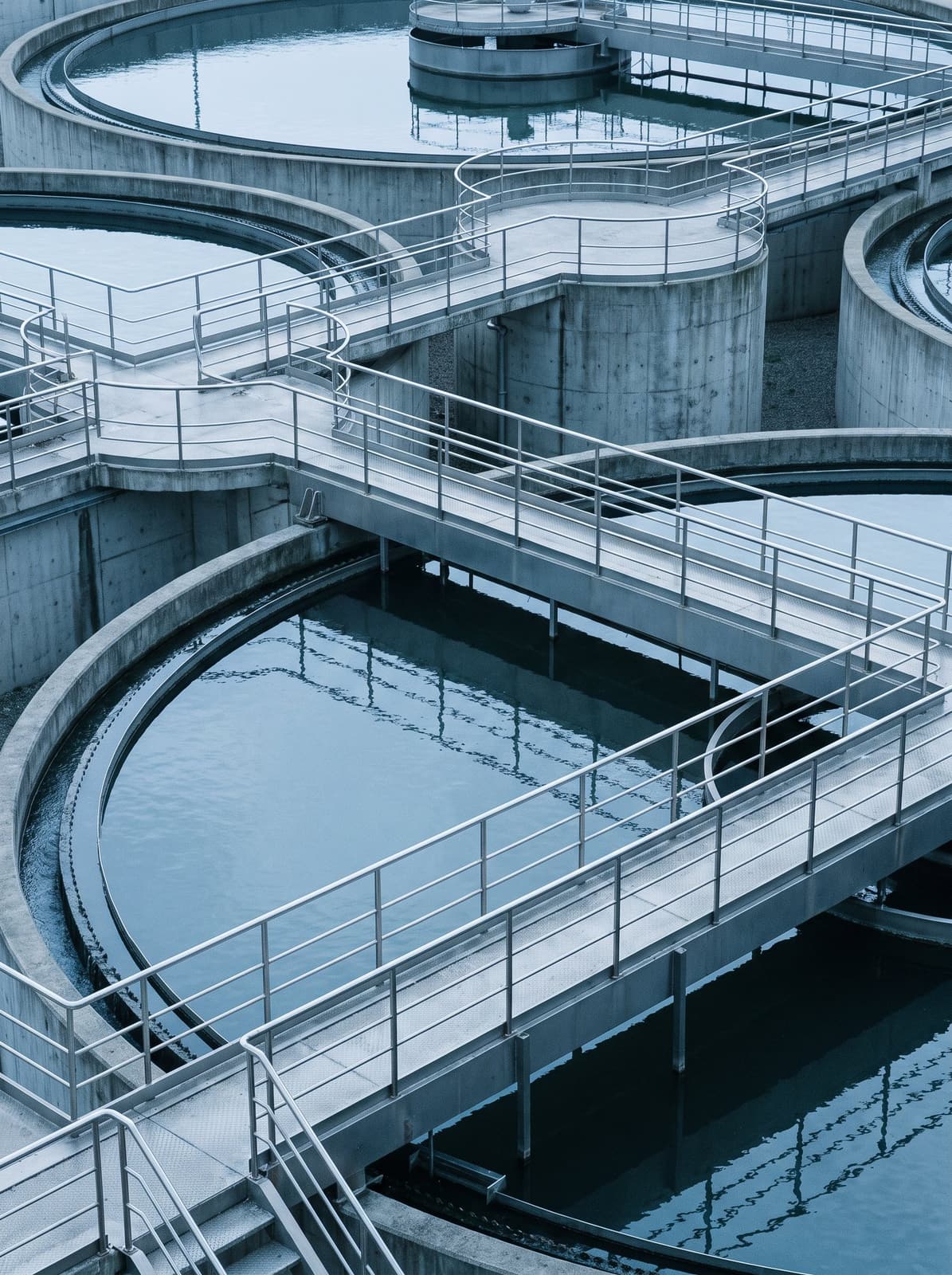
Water & Utilities
Technology integration for water and utilities environments.
Water and utility operators need telemetry, security and network infrastructure that holds up across distributed, largely unmanned estates.
What makes it hard
The challenges we are asked to remove.
- Treatment works, pumping stations and reservoirs spread across wide geographic areas, most of them unmanned
- Telemetry and SCADA estates of mixed age with inconsistent connectivity between sites
- Operational technology that falls within the scope of the NIS Regulations
- Exposed and damp environments with limited power and communications at remote assets
- Upgrade work that must not interrupt continuous treatment and supply processes
Diagram showing water and utilities technology as connected layers: SCADA and remote telemetry, wide-area and unmanned-site networking, cybersecurity and segmentation, site security and environmental monitoring, resilient communications, all supported by managed operations.
Sector context
What makes water and utilities technology different
A water estate is monitored rather than staffed. Pumping stations and service reservoirs report by exception, so a fault at a remote asset is visible only through the telemetry link that carries it, which makes connectivity part of the control system rather than an office service. Drinking water supply and distribution is a sector covered by the Network and Information Systems Regulations 2018. A designated operator must take appropriate and proportionate measures to manage risk to its network and information systems, and notify the competent authority of any incident with a significant impact on continuity of service.
Regulation 31 of the Water Supply (Water Quality) Regulations 2016 restricts which products may contact water intended for human consumption in England, and it reaches instrumentation wetted by treated water. At wastewater and sludge digestion sites, the Dangerous Substances and Explosive Atmospheres Regulations 2002 require an employer to classify places where an explosive atmosphere may occur into zones and to select equipment suited to the zone. A camera or radio head inside a classified wet well or digester must be selected against that zone rating before any network requirement. Treatment runs continuously, so cutover is planned around a process that cannot stop.
Relevant capabilities
How we respond.
Wide-area network and telemetry connectivity design for distributed assets
OT and IT segmentation across treatment works, control centres and corporate estates
CCTV, access control and intrusion detection for unmanned and remote sites
Environmentally rated cabling, enclosures and power provision for exposed locations
Cybersecurity architecture structured around telemetry and control-system boundaries
Certifications, framework positions and sector references are stated only once verified. Relevant evidence is shared during qualification, subject to confidentiality.
Next step
Bring the complete environment into one conversation.
Tell us what you are planning, replacing, integrating or trying to stabilise. We will help define the right next step.